
In partnership with

What's in store for this edition:

Be the source journalists want to call
Think Like a Reporter
A pet peeve many journalists have is when people don’t understand what an exclusive is and they misuse it. If you want to be taken seriously and not ignored completely by a journalist, it’s best to use exclusives, advances and embargoes correctly.
Calling something an “exclusive” does not make it one. It’s like that scene from The Office when Michael Scott yells to the office “I declare bankruptcy.” It was clear he didn’t understand what that means or how it works. Don’t do the same with “exclusives.”

Giphy
To be a true exclusive, one journalist or outlet gets first access to a story, and interview, a data set or other newsworthy information before anyone else does. By doing so you’re giving them a chance to “break the news”. A true exclusive is very exciting to a reporter, but more often than not they’re not real exclusives.
Exclusive vs. Advance vs. Embargo
Know the difference and when to use
If you are offering | Call it… | What it means |
|---|---|---|
One outlet gets first access to a story | Exclusive | You WILL NOT pitch or publish the same news elsewhere during the agreed window of time |
Several outlets receive the details before publication | Advance | They may receive information early, but terms must be clear |
Several outlets receive information early but agree not to publish until specific date/time | The information is shared in advance with a publication deadline |
Notice each one of these needs agreements from the journalist and they all include time frames.
It’s not an exclusive if it has already been posted on social media or blogs, sent in an email blast, pitched to other reporters, or offers no value to the journalist’s audience.
Be a Source They Want To Call
What kind of friend do you want? Someone who only comes to you when they want something or a friend who adds to your life and eases your burdens? Of course it’s the latter. Same with developing relationships with media. They will be more likely to remember someone who has made their job easier and isn’t always wanting more.
So instead of reaching out only when you want coverage, show you care, want to be useful, and you understand their work.
Follow reporters whose beat matches best with your field and follow and engage with their work. (Social media is a great place for this.)
Send tips, studies they may be interested in, or even story ideas, even if they have nothing to do with your business.
Ask them the question: “What else are you working on that I may be able to help with?”
💫 Pro-Tip: Handwritten notes add more meaning and show you care. I always send handwritten notes on cardstock with photos that my husband has taken on our travels. They have special meaning and I share that with them. That way they get to know me a bit better too. I’ve had nothing but positive feedback.
Reliability is the precondition for trust.
Do this now: Not sure if your news is an exclusive? Answer the questions below. If you answer no to any of them, it probably isn’t an exclusive.
Exclusive Litmus Test
Does your news have real weight? For example, a major expansion, large funding, meaningful initiative, a big innovation with big impact?
Can you really hold the news back from everyone else?
The reporter you’ve chosen, are they the right one to cover this story?
Do you have everything, all the materials ready before you make the offer?
Have you given a reasonable period of time for the journalist to cover it?
Are you going to keep your word?
I’ve offered exclusives to reporters and been turned down because they were out of town, or had other stories and were too busy. There’s lots to things consider before deciding whether offering an exclusive is the best route to go.
Term to Learn
Newswire is a wire service company that distributes press releases directly to journalists. Wire services are also known as press release feeds or press release distribution services.
FAQ
Q: Can I ask to review an article before it is published?
A: No. Journalists don’t work for you. Editors approve stories, not sources. If you want to maintain control over what goes out, that’s what advertising is for.
What you can do is provide accurate facts, spellings, links, names, titles and all other information a reporter needs before publishing. You can ask if they would like confirmation of technical details or stats.
If you work in an industry with strict compliance regulations, do your research before giving an interview to make sure you are in compliance on your side.
Learn from others.
0% Cool : 100% Cringe
Hyrox Athlete Issues an Apology After Racing While Covered In Feces and Spreading it Around

Pro Athlete, Joanna Wietrzyk, experienced bowel incontinence during a race and continued to finish the competition, leaving fellow athletes having to compete in her poop. The results of her action have led the organization, Hyrox to implement new race rules, Puma to limit their relationship with her, and for her to forfeit her result and cause, no doubt, lots of embarrassment to her and her family.
Part of her apology said “I am learning from this experience and will carry those lessons with me, including remembering that there is more to life than racing and knowing when it is right to step away.”
✍️ Key PR Takeaway: When your actions affect others in a negative way it’s best to apologize immediately, take responsibility, and say how you’ll do better in the future. By remembering how your actions affect others can help you avoid all sorts of problems in the first place.
Useful PR Resources.
🧰 TOOLKIT
Source of Sources (SOS) Media Queries
One tool that provides a short list of journalists looking for sources or experts is SOS — Source of Sources.

You’ll get a few emails daily with a journalist’s requirements. This can be helpful for scouting out a story that could be a fit for your brand, business, or organization.
Important note from the owner: “ONLY REPLY IF YOU ACTUALLY HAVE SOMETHING PRODUCTIVE TO ADD. If you pitch a reporter off-topic even once, and it gets back to me, you’re gone. No exceptions, no appeals.”
Reality check: So, please, please, please ALWAYS follow the directions and requirements from reporters. Do not ever twist the story idea, or stretch it just to make it fit your agenda, otherwise you will get blocked.
Attention Seeker of the Week
The Kitten Who Got Herself Hired
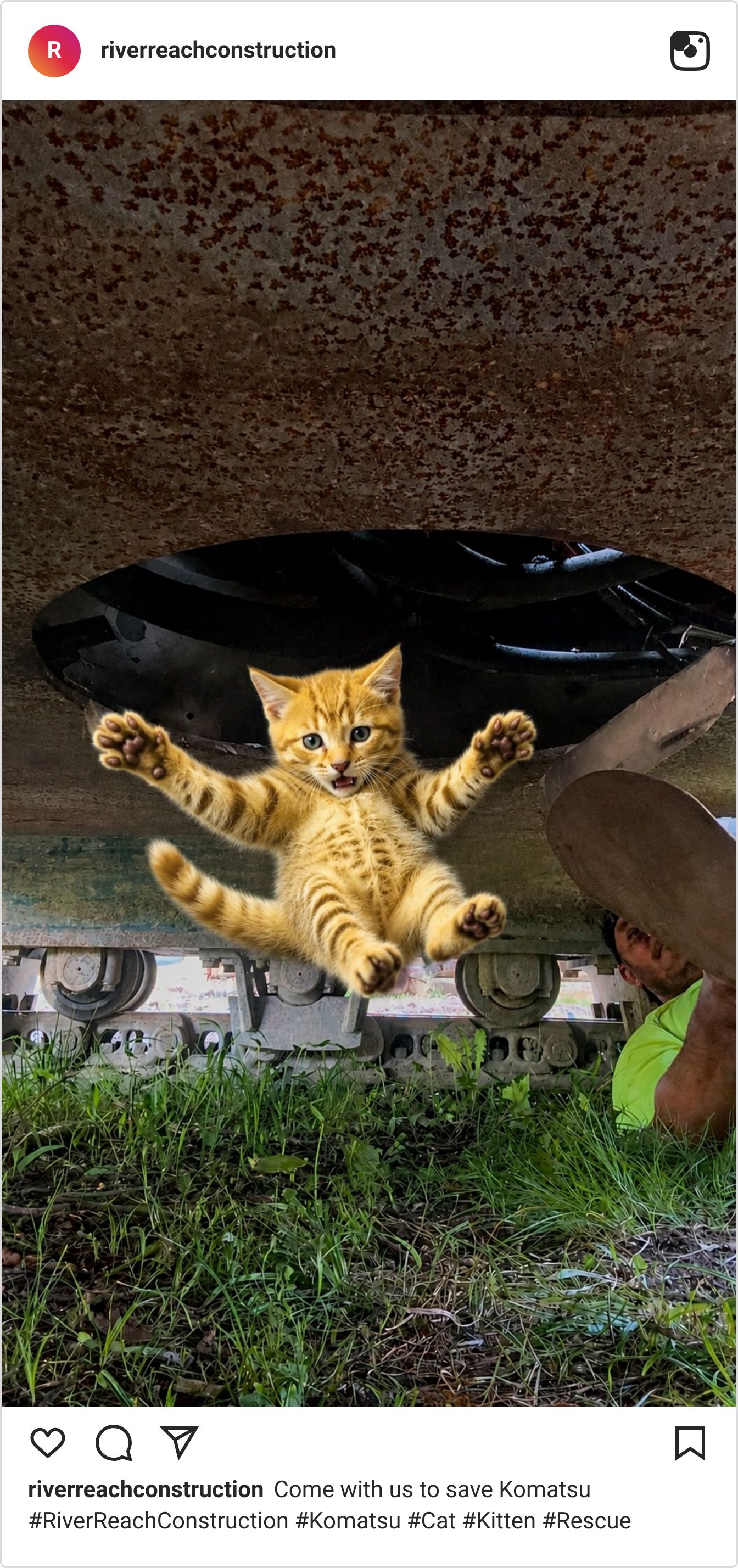
Sue, unnamed and tiny at the time, got herself stuck in an excavator. The dramatic rescue was caught on video and basically broke the internet. She was taken in and cared for by the crew and the excavator company caught wind of the whole thing and made sure she had plenty of OSHA-compliant gear, including tiny hi-vis vest and custom hard hat. I noticed the follower and likes from the company went up by thousands, and Komatsu company also got in on the publicity by helping provide for the kitten.
Nothing quite like kitten publicity!
Send me your pics. I’d love to feature your attention seeking fur baby.
Looking forward to a big speech I have this week!
Until next week, keep your shades on and stay cool.
Your fellow Seeker,
Keren
🕶️


The best marketing ideas come from marketers who live it.
That’s what this newsletter delivers.
The Marketing Millennials is a look inside what’s working right now for other marketers. No theory. No fluff. Just real insights and ideas you can actually use—from marketers who’ve been there, done that, and are sharing the playbook.
Every newsletter is written by Daniel Murray, a marketer obsessed with what goes into great marketing. Expect fresh takes, hot topics, and the kind of stuff you’ll want to steal for your next campaign.
Because marketing shouldn’t feel like guesswork. And you shouldn’t have to dig for the good stuff.