
In partnership with

What's in store for this edition:

Guardians of Reputations’ secret power: Fact Checking
Fact Checking
“Humans make 35,000 decisions a day.”
“Compound Interest is the seventh wonder of the world” - Albert Einstein
“Our brains process visuals 60,000 times faster than text.”
These all sound like solid, research-backed facts and you’ve probably seen at least one of them in a deck, a keynote, or a social post. The problem is none of them are actually backed by credible evidence. They are zombie facts: phrases that sound smart, get repeated a lot, and refuse to die.
In public relations, we are responsible for spreading correct information. So if we repeat zombie facts, or other “facts” without double checking then we run the risk of burning trust with journalists or our audience.
I’ve been guilty of this myself. I used the “compound interest is the seventh wonder of the world” quote in a pitch after a quick Google search. It sounded perfect, showed up everywhere and I didn’t give it a second thought. Only later did I learn the Einstein almost certainly never said that and quote experts cannot track it to him at all. Silly me, why would Einstein be talking about personal finances!
Consider that '35,000 decisions a day' stat. Do the math. That’s about one decision every two seconds you’re awake. That alone should make us suspicious. Yet if you Google “how many decisions do we make in a day” you’ll still see 35,000 repeated across articles and in AI answer box answers. Heck it’s even in commercials.
Yet the moment you add just one word – myth – to that search and the results change completely. Now you see the numbers come from weak guesses and copy-and-paste claims, not real research.
Same search. Same internet. Completely different reality, because you questioned it.
Why should we practice fact checking? How can you and I, the amateur fact checkers, get started without adding too much work to our already busy load?
Protect your reputation
PR pros are the guardians of protecting reputation. And there’s not much more dangerous to reputation than spewing out incorrect information. However fact checking can easily get forgotten because we live in an incredibly demanding society.
Another reason to fact check is because journalists open email from people they trust. A great way to earn trust? By consistently providing accurate and reliable information. So be careful of not putting bad stats into your pitches. Not just because it makes you look amateurish, it makes a reporter a little less likely to trust you next time.
Every time a blog, post, press release, pitch deck, etc., repeats a shaky stat, it adds to the confusion. It makes it harder and harder to see the through the murky waters. So we each carry a responsibility to add clarity and not confusion in the work we produce.
Fact-checking workflow
Follow these steps to get your facts checked.
Step 1: Identify the “claims”
Look for numbers (percentages, “X people do Y,” dates, rankings)
Quotes or stories attributed to famous person
Comparisons that sound dramatic. (“fastest ever,” “first of its kind,” “20x more effective”)
💫 PRO TIP: Don't rely on gut feeling alone. You need to check the facts.
Step 2: Go to the origin, not the first result
Original studies, official stats, direct transcripts are considered primary sources.
Look for primary sources (original studies, official statistics, direct transcripts) before blogs or listicles
🚩 Red Flag articles that say “various sources”
💫 PRO TIP: If you Google a claim add clarifying words: study, source, myth, debunked, fact check.
Step 3: Who is saying it?
Who wrote the article or study you are citing, and are they reputable?
What are their credentials?
Are there any other independent sources that report same data.
Step 4: When in doubt, rewrite or re-frame
Drop the zombie fact.
or
Consider reframing it into a more honest response.
Instead of “We make 35,000 decisions a day” say “We make thousands of small decisions every day and they add up.”
Instead of attributing a quote to Einstein say “As the old investing saying goes…”
Fact Checking Hierarchy Chart

Fact Checking Hierarchy — Attnseek.com
Learn more about fact checking in this CardCatalog article by librarian Hana Lee Goldi.
Journalists’ guides that say they should “seek truth and report it” and “rigorously test every fact before publishing.” If you bring that same sense of seriousness to your pitches, then soon you’ll be the one a journalist calls first.
“and you will know the truth, and the truth will set you free.”
Do this now: Before you send out your next pitch, ask yourself:
Have I checked every number and date against primary or clearly cited sources?
Have I checked any quotes are correctly attributed?
Can I provide a link to the original study, report or data?
Can I confidently defend any push back?
Term to Learn
Verification is the process of making sure something is what it says it is.
FAQ
Q: Isn’t Googling a stat and seeing it on a bunch of sites enough?
A: No. If the same unsourced number appears across lots of blogs, that’s a sign of an echo chamber, not reliability. You still need to find the original study, official data or primary source behind the claim.
Learn from others.
100% Cool : 0% Cringe
Adidas is making world cup jerseys for dogs.

Adidas launched a FIFA World Cup 2026™ pet jersey collection. Now soccer fans can match their team colors with their furry attention seekers.
I compliment the writing of this CNN article by Oscar Holland. It is witty, fun, and grounded in facts. Just check out the link for the claims. I really appreciate entertaining and well-sourced content.
And yes, dogs (and animals in general) are always attention magnets, so why not tie them into your product, offering, or brand ethos when it genuinely fits?
✍️ Key PR Takeaway: Be consistent. Use good photography or videos. Keep it wholesome. Take good care of the animals. Don’t give any cause for concern. Avoid bothering your animals just to get likes or followers. Make sure the animal angle connects to your brand story.
Useful PR Resources.
In no particular order, here’s a list of my weekly reads to keep up on the PR industry. There maybe a marketing one or two in the mix 😉
Famous Campaigns - Your weekly hit of inspo from the universe of creative brand marketing.
BuzzStream - A weekly newsletter goes out to thousands of hungry digital PRs, link builders, and SEOs. Chocked full of helpful BuzzStream articles, videos, and podcast episodes full of tips and tricks from experts in the field.
PR Insider - Weekly expert advice, campaign inspiration and a list of reactive dates to plan around.

PR Daily - PR Daily gives PR, marketing and communications pros the latest news, practical tips.
The Digital PR Observer Newsletter - Want to stay up to date with the latest Digital PR news and resources? The Digital PR Observer Newsletter is your go to resource!

This Week In PR Takes - weekly go-to source for the conversations that public relations & communications professionals are having about the industry.
The Comms Stack - A weekly look into how AI is shaping communications.

Attention Seeker of the Week
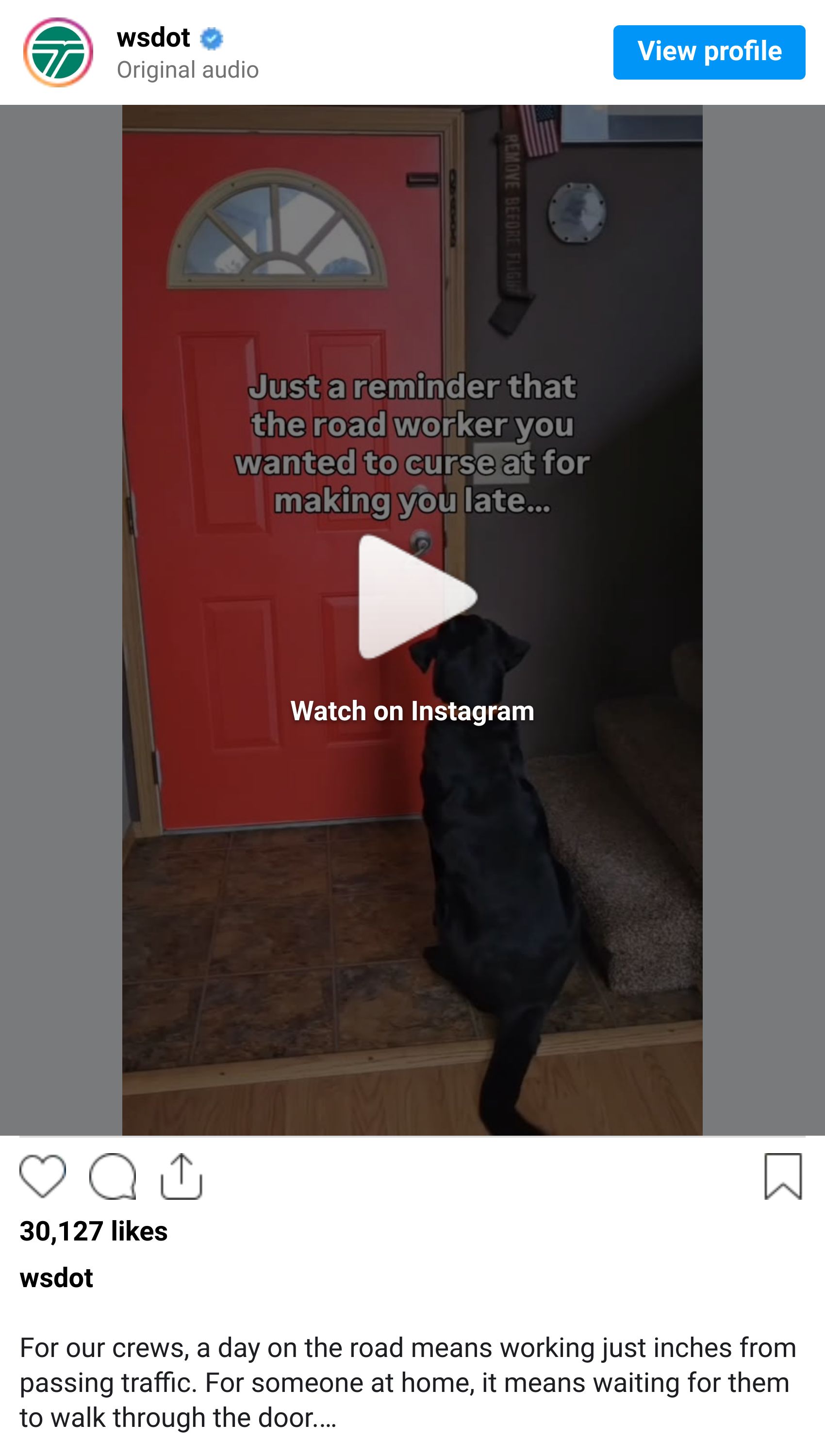
Here’s an example of a lovely message using furry friends for a company that has nothing to do with animals: Washington State Department of Transportation and their Work Zone Awareness campaign. Videos of wagging tails and the pure excitement a dog has for when their person comes home, combined with music and a clear message make for a powerful and memorable campaign. Who’s a good boy!
How they did this photo shoot of the jersey wearing pooches is beyond me! Although, I think team Mexico should have been a Chihuahua. 🦴
Until next week, keep your shades on and stay cool.
Your fellow Seeker,
Keren
🕶️

Your clients can't tell you dictated that.

That polished proposal? Dictated in two minutes. The detailed follow-up email? Spoken between meetings. The Slack update with clean formatting and exact numbers? Voice.
Wispr Flow turns everything you say into professional, send-ready text. Speak naturally — go on tangents, change your mind, circle back — and get output that reads like you spent twenty minutes writing it.
89% of messages sent with zero edits. Millions of professionals use Flow daily. Works in every app on Mac, Windows, and iPhone.